
Welcome to
The Global Hearth!
A podcast for conversations that stoke the mind and warm the heart
About The Global Hearth Podcast
How does power shape the stories that are told in our rapidly evolving world? How does the earth capture carbon, and what impact can that have on decelerating climate change? Can developmental disabilities caused by malnutrition in Cambodia, or anywhere, be prevented?
These questions and more will guide our conversations with UO Researchers at The Global Hearth, a new podcast produced by the Global Studies Institute.
In a time of rapid change, The Global Hearth is a place to slow down, tune in, and illuminate the impact UO’s fierce community of inquiry is having around the world.
Tune into Episode 8
In this episode of The Global Hearth, Professor Vu illuminates how traditional scholarship on the Vietnam War commonly overlooks the agency and independent visions of the true diversity of political ideologies within Vietnam, and his expertise helps us understand the importance of the Communist Party Chief To Lam’s “spectacular” rise to power in the contemporary era.
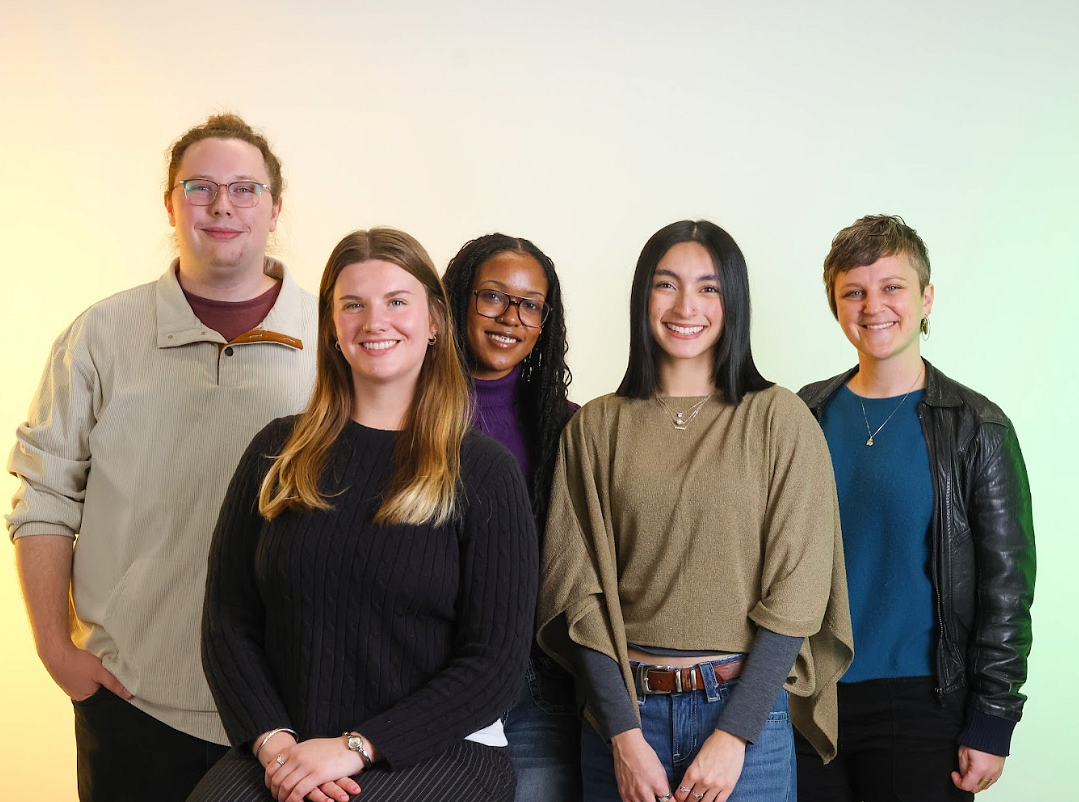
From Left: Julian Green, Ellie Johnson, Jurnee Brinson, Samantha Parra, Emma Lynn. Photo by Jai Pandhoh, @pandaa.media
Meet the Podcast Team
The Global Hearth is produced by the Global Studies Institute and hosted by Emma Lynn, Global Research Development Coordinator. Emma works closely with faculty to understand what questions and frameworks guide their research, identify meaningful moments of impact, and create a conversational space to explore the myriad human experiences that shape global scholarship.
Students are the heart of the University of Oregon - and we're so grateful for the team of students who have made each episode come to life.
Ellie Johnson '26, Journalism, Student Producer, supports the early stages of production by researching featured faculty, assisting with recording sessions, and the first round of editing.
Julian Green '29, PhD in Data-Driven Music Performance and Composition, and Jurnee Brinson '26, Popular Music Studies and Data Science, Sound Design Interns, lead the post-production process, refining each episode and designing the final audio experience for listeners.
Samantha Parra '26, Public Relations, Marketing & Communications support, manages podcast distribution on Spotify and Apple Podcasts, and develops marketing/PR materials to promote each episode.
Together, the team works to highlight the global research and perspectives shaping the University of Oregon community.
The Global Hearth student podcast team. Photo by Jai Pandhoh. @pandaa.media
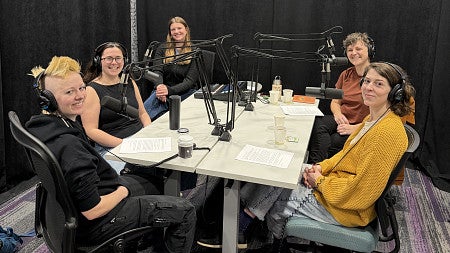
From left: Avi Locke, Bella Albiani, Ellie Johnson, Emma Lynn, and Jo Weaver recording an episode.
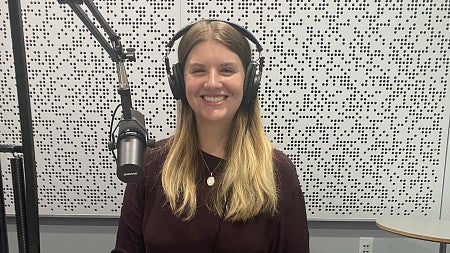
Behind the scenes, student producer Ellie Johnson is pictured on set.
Listen to The Global Hearth on
Episode 01

Elly Vandegrift: “Research, Innovation, Impact — Worldwide"
"The work that we do and the work that we support has a real impact on people, the future of individuals, communities, and whole countries.” - Elly Vandegrift, Assistant Vice-Provost for Global Partnerships and Director of the Global Studies Institute (GSI)
Join us at the Global Hearth as Elly Vandegrift explores how research, resilience, and relationship-building are at the core of meaningful global engagement.
Learn how GSI supports internationally focused grants, faculty research centers, global travel for scholars, and cross-border collaborations that translate scholarship into tangible impact.
GSI research centers: Amazon Sustainability Center | APRU Sustainable Cities and Landscapes Program | Center for Applied Second Language Studies | Center for Asian & Pacific Studies | Center for Cyber Security and Privacy | Center for Global Health | Global Justice Program | Islamic Studies Initiative | UNESCO Crossings Institute | US-Vietnam Research Center
Additional Resources: Elly Vandegrift’s google Scholar Page | GSI’s available Resources and Funding | H.J. Andrew’s Experimental Forest
To learn more about Dr. Aisha al-Mana’s work in Saudi Arabia, make sure to check out her 2026 memoir, I Am My Own Guardian.
Māniʻ, ʻĀʼishah Muḥammad ʻAbd Allāh, and Nicola Sutcliff. I Am My Own Guardian. United States: Herstory House, 2026. Print.
Episode 02

Lucas Silva: “Co-Creative Approaches to Complex Climate Processes”
“Where we live here in the Pacific Northwest, these are the most productive and biodiverse forests of their kind in the world. Not only that, they hold vast amounts of carbon, vast amount of water and deep, deep cultural roots and historical, traditional ecological knowledge of environmental changes, sustainability, and stories untold of how people figure out how to live here and how to understand and love and be part of the system in sustainable ways.” - Lucas Silva, Director of the Amazon Sustainability Center, Professor of Environmental Studies and Biology, and Director of the Soil Plant Atmosphere (SPA) Lab at University of Oregon
Professor Lucas Silva reflects on how his passion as an environmental scientist has taken him around the globe, from field sites in the Amazon Basin to the Tibetan Plateau. At the Global Hearth, he shares the key lessons and insights he has picked up along the way: what it takes to truly speak your mind, how young scientists can prepare themselves for success working in interdisciplinary contexts, and how his current co-creative work with Indigenous communities is leading to surprising scientific breakthroughs. Learn about this team’s dynamic work on the CARBS initiative, which uses isotopic analysis, environmental DNA, and artificial intelligence to better understand how ecosystems function, adapt, and respond to human disturbance and climatic change.
Quick links: Amazon Sustainability Center | The CARBS Initiative | Soil Plant Atmosphere (SPA) Lab | Terra Preta, commonly known as “Amazon Dark Earth” | Lucas Silva’s Google Scholar Page
Episode 03

Xiaobo Su: “From Tea Tables to Tourism Economies: Reshaping Home in a Globalized World”
“I think the beauty of geography is you can study pretty much everything, from animal to trees to mountains to human beings...tea for me is the entry point to understand how people socialize with unfamiliar people.” - Xiaobo Su, Director of the APRU Sustainable Cities and Landscapes Program and Professor of Asian Studies, Climate Studies, Geography
Xiaobo Su, a human geographer at the University of Oregon, joins the Global Hearth to explain how everyday human behaviors—from tea drinking in Chinese tourist towns to cross-border smuggling along the China–Myanmar border—reveal the spatial dynamics of power, belonging, and political economy. Drawing on the work of philosophers like Antonio Gramsci, he reframes concepts like home, governance, and cultural heritage as negotiated processes shaped by cooperation, compromise, commodification, and the lived realities of communities navigating inequality and state control.
Quick links: Antonio Gramsci | Geographic Information System (GIS) Urban State Venturism | Xiaobo Su’s Google Scholar Page
Research locations referenced in this episode: Lijiang (Lijiang Ancient Town), China | Guangzhou, China Dongguan, China | Ruili, China Muse, Myanmar
Music attribution: Track: Bella Ciao, SE Music by fiftysounds
Episode 04

Gyoung-Ah Lee: “Food, Memory, and Ancient Identity”
“Although we have very limited data, if we just accept that people are people and they are in a way like us, [we understand] they want to love and be loved.” - Gyoung-ah Lee, Professor of Anthropology, Asian Studies, and Food Studies
Archaeologist Gyoung-Ah Lee invites us to look past the broken stones and pottery shards of the Neolithic period to see the profoundly human stories they carry. Reframing the ancient world not as a cold struggle for survival, but as a place where people expressed themselves artistically, leaving behind touching artifacts such as a Neolithic infant's footprint preserved in a clay plate. The conversation re-stories common tropes to show how the move from foraging to farming was a sophisticated, balanced transition guided by Traditional Ecological Knowledge—a "bottom-up" practice centered on stewardship and resilience.
By illuminating the communal hearths of ancient Korea, Professor Lee shows us that food has always been more than just nutrition; it is a medium for connection and community that has linked humans and our ancestors together for thousands of years.
Quick links: Han Kang, winner of the Nobel Prize in Literature 2024 | Jeju Island, Korea | Gyoung-ah Lee’s Google Scholar Page
Episode 05

Jeff Measelle & Dare Baldwin: “Protecting Infant Developmental Health in Cambodia Through Thiamine Supplementation”
“The first thousand days of life is when we’ve got to get it right.” - Jeff Measelle, Co-Director of the Center for Global Health, Professor of Global Health and Psychology
“Jeff and I had the privilege to go to Cambodia to help train the staff on how to carry out the neurocognitive tasks that we designed for the study. And, these are such thoughtful, talented, hardworking, determined, dedicated, young researchers traveling to rural village homes every day of the week, week after week, month after month, often in monsoon rains, down muddy tracks, for two hours, carrying heavy backpacks with equipment.” - Dare Baldwin, Professor of Psychology and faculty member in the Clark Honors College
Join Dare Baldwin and Jeff Measelle at the Global Hearth to explore the fragile yet powerful connection between maternal nutrition and a child's lifelong potential, bringing light to a silent crisis in Cambodia where thiamine deficiency puts infants at risk of lethal beriberi disease and cognitive stunting. Jeff and Dare share how their research is demonstrating how the attunement between a parent and their infant, which is so important to early learning, can be made vulnerable by the lack of a single micronutrient. Ultimately, the project seeks to break the cycle of poverty and hidden hunger through sustainable, society-wide interventions like food fortification, protecting the foundational first 1,000 days of life for every child, and the community that cares for them.
Quick Links: What is neuroplasticity? | What is Beriberi disease? | Thiamine supplementation | Let's learn the Khmer language! | Dare Baldwin’s Google Scholar Page | Jeff Measelle’s Google Scholar Page
With gratitude for support from: Hellen Keller International | Weiss Asset Management Foundation
Episode 06

Chris Chavez: "Cultivating a critical lens: Power and storytelling in the media."
“I’m interested in voice in the collective sense. Who gets to have a voice? Which communities get to be heard? Which other communities are rendered voiceless in this process?” - Chris Chavez, Director of the Center for Latina/o and Latin American Studies and Carolyn Silva Chambers Distinguished Professor of Advertising
Professor Chris Chávez joins us at the Global Hearth to explore how the media and advertising industries systematically turn down the volume on Latinx voices, limiting access to freedom of expression and stifling diversity in representation. Using National Public Radio as a case study, Chris explores how music can serve as a vibrant form of resistance, while documenting the institutional privileging inherent in training protocols that coerce journalists into neutralizing their cultural identities and homegrown accents to achieve commercial viability. Chris ultimately leads us into the question of why a free press truly matters, who the work is for, and what listeners can do to diversify and critically expand their algorithms to more accurately reflect the vibrancy that surrounds the increasingly globalized world.
Quick links: What is “sociolinguistics?” | Let's explore "Fractal Recursivity” | Reporters Without Borders: World Press Freedom Index | World Press Freedom Day | Octavio Paz, Nobel Laureate | Goodby, Silverstein, & Partners | Chris Chavez’s Google Scholar Page
Additional Reading:
Don’t Shoot the Journalist! | Laufer, Peter. Don’t Shoot the Journalists : Migrating to Stay Alive. London: Anthem Press, 2025. Print.
The Sound of Exclusion: NPR and the Latinx Public | Chávez, Christopher. The Sound of Exclusion : NPR and the Latinx Public. 1st ed. Tucson: University of Arizona Press, 2021. Print.
Isle of Rum : Havana Club, Cultural Mediation, and the Fight for Cuban Authenticity | Chávez, Christopher. Isle of Rum : Havana Club, Cultural Mediation, and the Fight for Cuban Authenticity. New Brunswick: Rutgers University Press, 2024. Print.
Episode 07

Jo Weaver, Bella Albiani & Avi Locke: “Health and Stress Among People Experiencing Homelessness in Eugene”
“There’s nothing that compares to the generosity I’ve learned is possible to exist by virtue of this community and the way they care for each other.” - Avi Locke, ‘25 UO Graduate & Lab Manager for the UO Stress Physiology Integrative Team Lab & the Global Health Biomarker Lab
Bella Albiani, Student Researcher, Multidisciplinary Science ‘26
Jo Weaver, Co-Director, Center for Global Health, Associate Professor, Global Studies
In this episode of The Global Hearth, we learn about a groundbreaking National Science Foundation-funded study exploring the intersection of homelessness, stress, and physical well-being. Led by medical anthropologist Professor Jo Weaver and biological anthropologist Professor Josh Snodgrass, the project partners with community organizations in Eugene to research and develop a multi-faceted understanding of the lived realities experienced by our unhoused neighbors. Joined by staff researcher Avi Locke and student researcher Bella Albiani, Jo Weaver helps us understand why addressing homelessness in Eugene must be approached through comprehensive solutions that are tailored to our local ecosystem. This project is the first of its kind to combine three distinct data streams: physiological biomarkers (i.e. taking blood samples to measure hormones like cortisol and cholesterol), structured questionnaires, and personal narrative to create a holistic picture of life unsheltered that quantitative data alone cannot fully capture.
Quick Links: Homelessness Policy and Health Project | Amazon Wishlish for Eugene Neighbors | UO Housing and Homelessness Hub | Black Thistle Street Aid | Allostatic Load | Biomarkers | What is Narcan? | Jo Weaver’s Google Scholar Page
Episode 08

Tuong Vu: "Untold Perspectives: The Politics of Agency in US-Vietnam Relations”
“Scholars tend to identify communism with the Vietnamese Nation. And that is wrong because there were a diversity of political ideas and movements throughout Vietnamese history and modern history. The communists were a radical minority on the fringe of society.” - Tuong Vu, Director of the US-Vietnam Research Center and Professor of Political Science
In this episode of The Global Hearth, Professor Tuong Vu describes his method of using intimate archival sources—such as letters from a young revolutionary named Ho Chi Minh about high rent & poor living conditions in Moscow or personal documents from the widely maligned "First Lady" of South Vietnam, Ngo Dinh Nhu—to help understand the historical and human origins of political ideologies that influence broad patterns of political change. Professor Vu illuminates how traditional scholarship on the Vietnam War commonly overlooks the agency and independent visions of the true diversity of political ideologies within Vietnam, and his expertise helps us understand the importance of the Communist Party Chief To Lam’s “spectacular” rise to power in the contemporary era.
At the Global Hearth, we hear Tuong’s perspective on how U.S. diplomacy efforts might influence human rights in Vietnam, and explore the question of what modern scholars and activists might learn from the U.S. anti-war movement of the late 20th century.
Quick Links: Ho Chi Minh | Madame Ngo Dinh Nhu | New York Times article: Vietnam’s Leader Has New Power, and He’s in a Hurry | U.S.-Vietnam Research Center | The Vietnamese Áo Dài in a Time of War: Fashion, Citizenship, and Nationalism (1954–1975) | Singer-Songwriter: Do Nguyen Mai Khoi | Tuong Vu’s Google Scholar page | “Shostakovich; Symphony No. 5, 1.” Creazilla.
Additional Reading:
The White Pebble: Madame Nhu’s Memoirs | Trần, Lệ Xuân et al. The White Pebble : Madame Nhu’s Memoirs. Ed. Tuong Vu. Trans. Quang L. Phan and Maria Cristina de Mariassevich. Lubbock, Texas: Texas Tech University Press, 2025. Print.
What to watch:
Vietnam - Between communism and capitalism | DW Documentary
The General – Vietnam in the Age of To Lam | Documentary
Still hungry?
Saigon Cafe – Eugene, Oregon | Pho the Good Times – Eugene, Oregon